Screwdriver set: a complete buying guide
A good screwdriver set is one of the most useful buys for a home. It turns a drawer of loose drivers into one organised kit, ready for flat-pack furniture, a loose handle, a battery cover, or a small repair. You need a screwdriver set that matches the screws you meet, fits your hand, and stays organised.
This guide covers what a set includes, the main types, bit types and sizes, handles, storage, and how to choose for home, DIY, electronics, and professional work. It also covers features, benefits, drawbacks, and buying advice, including the stalwart 39-piece screwdriver and bit set and the stalwart screwdriver set 26 piece, discussed only from their names and piece counts.
What a screwdriver set includes
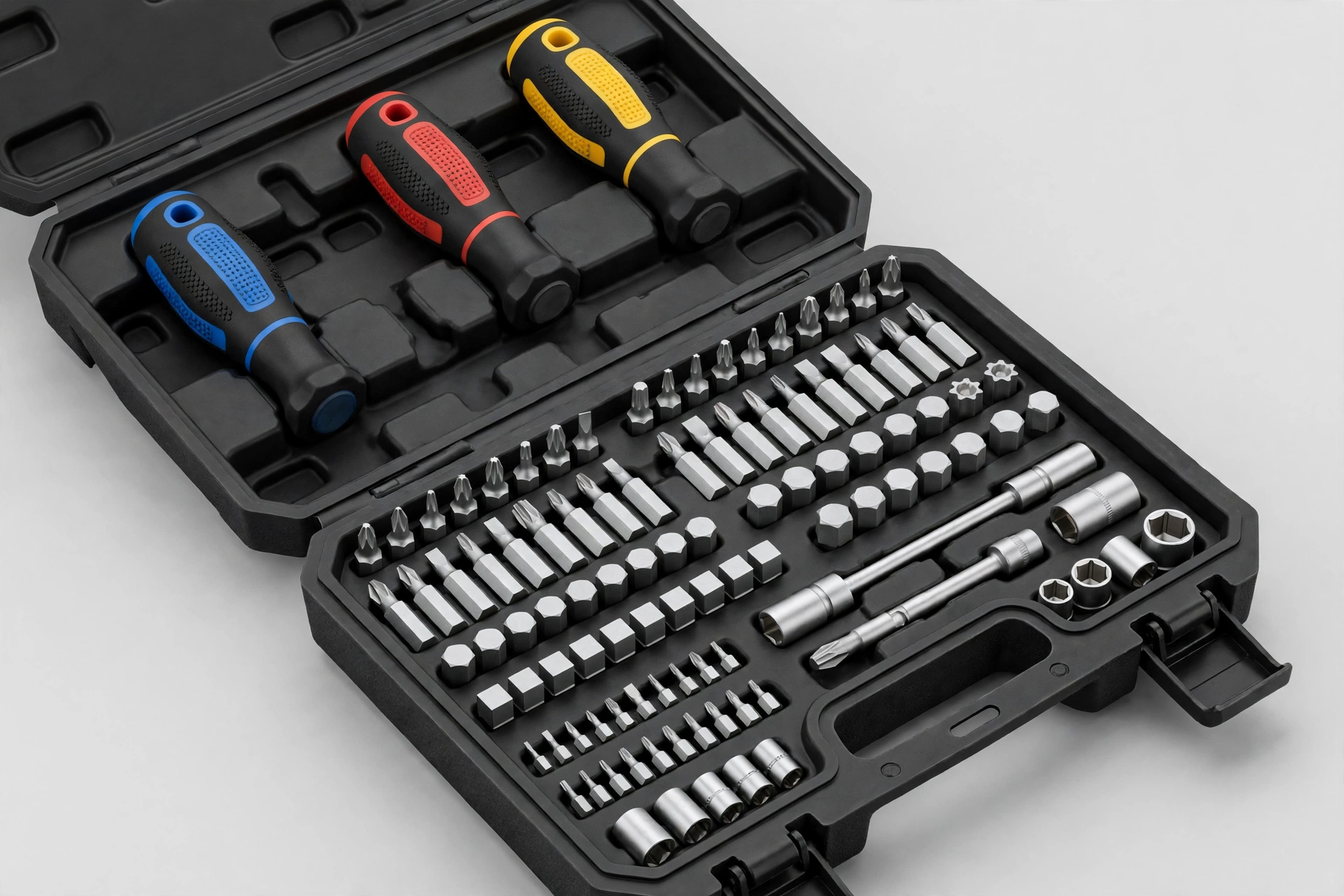
A screwdriver set is a group of drivers and bits sold together in a case, rather than a single tool bought alone. Most sets include:
- Fixed screwdrivers in common sizes, such as flathead and Phillips
- A bit holder or ratcheting handle for interchangeable bits
- Bits for Phillips, flathead, Torx, hex, and sometimes Pozidriv screws
- Small precision bits for electronics, glasses, toys, and battery covers
- A case, tray, or rack that keeps every piece in place
Some sets use fixed drivers only. Others use one handle and many bits. Bit sets take up less space and cover more screw types, while fixed drivers can feel stronger for heavy turning. Many people use both: fixed drivers for everyday jobs, and a bit set for less common screws. If you already own a single screwdriver, choose a set that adds sizes you lack, not one that duplicates it.
Types of screwdriver set
General home sets
A general home screwdriver set suits most people. It includes medium and large Phillips and flathead drivers, a bit holder, and Torx and hex bits, for furniture, door hardware, curtain rails, appliances, and basic repairs. Choose comfortable handles, clear markings, and a case that closes properly.
Precision sets
A precision screwdriver set is made for small screws in electronics, watches, glasses, toys, and laptops. Drivers are slim, tips are small, and many have a spinning end cap for gentle control. It is a useful second kit, not a replacement for a general set, because small handles give little leverage for larger screws.
Ratcheting sets
A ratcheting screwdriver set turns in one direction and freewheels back, so you do not lift your hand on every turn. This helps with long screws, tight spaces, and assembly work. Choose a ratchet that feels smooth, switches easily, and locks for normal use.
Professional sets
Professional sets have more sizes, stronger tips, and cases made for daily use. They suit daily repair work, but for occasional home use they can be more than you need.
Bit types and sizes
Using the wrong bit is a common cause of damaged screws. Cover the types you meet most.
Phillips: the cross-shaped drive in household screws, furniture, and appliances. A phillips screwdriver is core to most kits. PH2 is most common at home, PH1 suits smaller screws, and PH0 suits small electronics.
Flathead: the straight-line drive in older fittings, switches, and some furniture. Tip width matters: too narrow slips out, too wide will not fit.
Torx: the star-shaped drive in electronics, appliances, cars, and bikes. A torx screwdriver is worth having, because other bits fit Torx poorly. Common sizes are T10, T15, T20, and T25.
Hex: the six-sided drive in flat-pack furniture and bikes. Check your set includes the small furniture sizes, not only large workshop sizes.
Choosing the right size
- Match the bit closely, with no visible wobble.
- Use the largest bit that fits fully without forcing it.
- If it slips, stop and try the next size up or down.
- Keep the driver straight and push gently while turning.
- Replace a worn bit, because a damaged tip damages screws.
Clear size markings save time and reduce mistakes.
Handles and storage
A comfortable handle gives control and reduces fatigue. Look for a shape without sharp edges, a non-slip surface, and a size that gives leverage without being awkward in tight spaces. Long drivers reach recessed screws; short drivers work in cupboards and behind appliances.
A good case keeps bits in order and protects tips. Check that every bit has a labelled slot, the case closes securely, it fits your storage space, and you can read size markings easily. A good case also shows when a bit is missing — often the PH2 or T20 you need most.
How to choose by use
Home and general repairs
Choose a compact set covering Phillips, flathead, Torx, and hex sizes. Include PH1 and PH2, medium and large flathead bits, T10, T15, and T20, common hex sizes, a comfortable bit holder, and a sturdy case. You need the sizes that cover most household screws, plus a few less common ones.
DIY and flat-pack furniture
Choose a larger set with a ratcheting handle, longer drivers, and a wider bit range. Flat-pack furniture often uses hex, Phillips, and Pozidriv fixings. A ratchet reduces fatigue, and a magnetic holder helps keep screws in place. Use manual drivers for final tightening, as power can strip threads or damage board. For repetitive assembly, see our guide to the best electric screwdriver and our overview of an electric screwdriver. If you are weighing powered options, read our comparison of an electric screwdriver vs drill.
Electronics and small repairs
Choose a precision set with small Phillips, Torx, and flathead bits, slim shafts, magnetic tips, and a rotating cap. Avoid large home drivers here: the wrong size can damage a small screw head or crack a plastic housing.
Professional and workshop use
Choose durable tips, clear markings, and a case you can carry and restock. You will want long and stubby drivers, plus bits you can replace singly when they wear.
Features, benefits, and drawbacks
Features worth looking for:
- Magnetic tips or a magnetic bit holder, to hold screws in place
- Clearly marked sizes, to avoid using the wrong bit
- A ratcheting handle with a lock, for long screws and tight spaces
- Replaceable bits, so a worn bit does not mean a new set
- A strong, well-fitting case, and a comfortable, non-slip handle
Be cautious about very high piece counts made of duplicates, tiny bits you will never use, and weak case latches. More pieces do not always mean more useful coverage.
Benefits: one kit covers many screw types; you spend less time searching; bits save space versus buying every driver singly; and a set is usually better value than buying drivers one by one.
Drawbacks: a large set can include bits you never use; cheap bits wear quickly and damage screws; a bulky case is hard to store; and a poor case lets bits fall out. A focused set with good bits beats a large set with weak tips.
Comparison table
| Set type | Best for | Main strength | Main limitation |
|---|---|---|---|
| General home screwdriver set | Everyday home repairs | Covers the most common screws | May lack precision sizes |
| Precision screwdriver set | Electronics and small devices | Fine control on small screws | Not for large or tight screws |
| Ratcheting screwdriver set | DIY and long screws | Faster turning, less effort | Ratchet quality varies |
| Bit-heavy set | Travel and varied screws | Wide coverage in a small case | Less leverage than fixed drivers |
| Fixed-driver set | Heavy turning | Strong, simple, direct feel | Takes up more space |
| Professional set | Daily repair and trade use | Wide range, durable tips | Larger and more expensive |
The stalwart sets: a general comparison
Shoppers often compare the stalwart 39-piece screwdriver and bit set and the stalwart screwdriver set 26 piece by name. This section uses only their names and piece counts. It does not claim materials, prices, sizes, or test results for either set; check the product listing for those details.
The main difference is scope. The stalwart 39-piece screwdriver and bit set, with 39 pieces, suggests a broader kit than the stalwart screwdriver set 26 piece, with 26 pieces. More pieces usually means more bits or sizes, which can help if you want one kit for a wider range of screws. Fewer pieces usually means a more compact kit, easier to store and carry, which may be enough for general home repairs.
When comparing the stalwart 39-piece screwdriver and bit set and the stalwart screwdriver set 26 piece, ask which screws you meet most, whether the larger set adds useful sizes or duplicates, whether the smaller set fits your storage, and whether either includes precision sizes you need. For general home repairs, the stalwart screwdriver set 26 piece may be enough. For more DIY or varied repairs, the stalwart 39-piece screwdriver and bit set may suit you better for its broader count. Check the full contents, handle style, and case design first, and do not judge on piece count alone. For another branded approach, see the milwaukee screwdriver set.
Buying advice
- List the five jobs you do most often, and the screws involved.
- Check the set covers those screw types and sizes first.
- Look at handle size and grip, not just piece count.
- Check bits are clearly marked and easy to replace.
- Check the case closes securely and fits your space.
- Compare useful coverage, not the highest number on the box.
- Read the full contents list, and watch for duplicates.
- Choose a set you can restock with standard bits.
If this is your first set, a mid-sized general home set is usually safest. Add a precision set later for electronics, and a ratcheting handle if you take on more DIY. A very cheap set can cost more later if bits wear out or damage screws.
Frequently asked questions
What is the best screwdriver set for home use?
A compact general set with PH1 and PH2 Phillips bits, medium and large flathead bits, T10 to T20 Torx bits, and common hex sizes. It should have comfortable handles, clear markings, and a case that closes securely. A precision set is a useful addition for electronics.
How many pieces do I need in a screwdriver set?
Most home users do well with about 20 to 40 pieces, if the pieces cover useful sizes rather than duplicates. A smaller set can suit basic repairs, while a larger set suits DIY users who meet more screw types. Judge by the contents list, not piece count alone.
Are bit sets better than fixed screwdrivers?
Bit sets are better for coverage and storage, as one handle can use many bits. Fixed screwdrivers are often better for heavy turning. Many people use both: fixed drivers for everyday sizes, and a bit set for less common screws.
What is the difference between the stalwart 39-piece screwdriver and bit set and the stalwart screwdriver set 26 piece?
By name only, the difference is piece count: the stalwart 39-piece screwdriver and bit set has 39 pieces, while the stalwart screwdriver set 26 piece has 26 pieces. The larger set suggests broader coverage; the smaller suggests a more compact kit. Check the full contents list before buying.
Should I buy a ratcheting screwdriver set?
A ratcheting set is worth considering if you assemble furniture, drive long screws, or work in tight spaces. It saves time and reduces fatigue.
Conclusion
A good screwdriver set should make repairs easier, not harder. Start with the screws you meet most, choose a set that covers them well, and check handles, markings, and storage.
Piece count can guide you, but it should not decide for you. Compare contents, comfort, and case design before you buy — whether you are considering the stalwart 39-piece screwdriver and bit set, the stalwart screwdriver set 26 piece, or any other kit. The right screwdriver set is the one you can find quickly, hold comfortably, and trust to fit the screw in front of you.


