Electric screwdriver for rc cars: a practical guide for hobby builds and repairs
Quick answer: Choose a small, low-torque precision model with hex 1.5, 2.0 and 2.5 mm bits plus PH0 and PH1. Use the lowest torque setting, start slowly, and stop as soon as the screw is snug. Switch to a manual driver for the smallest screws and electronics, and always remove the battery before working on the car.
An electric screwdriver for rc cars can save a lot of time on a build or a repair, but RC cars are not like furniture or home DIY. The screws are tiny, the parts are made from plastic, aluminium, and carbon fibre, and a tool that is too strong can strip a screw, crack a chassis part, or damage a circuit board in a second. The right tool for RC work is small, light, and easy to control, with low torque and precision bits that fit the tiny screws used in these cars.
This guide explains how to choose an electric screwdriver for rc cars, which bits and torque settings to use, and how to work on a chassis, suspension, and electronics safely, step by step. It is written for hobbyists building their first kit, and for people who race, repair, or upgrade RC cars regularly.
If you are new to small screwdrivers, start with our guide on the mini electric screwdriver, which explains what a mini model is and when it is the right choice.
Why RC cars need a different screwdriver
RC cars are full of small screws in delicate parts. A 1/10 scale car may have dozens of screws holding the chassis, suspension arms, gearbox, motor mount, and electronics in place, and many of them are only a few millimetres across. The screws are often made from soft steel, and the parts they hold are often plastic, so a screw that is over-tightened can strip the plastic thread and never hold again.
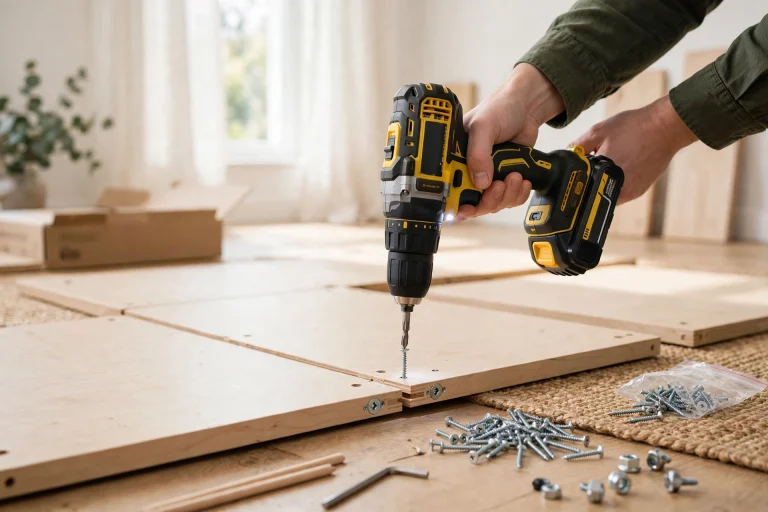
A standard home electric screwdriver is made for furniture and DIY, with more power than RC work needs. An electric screwdriver for rc cars is made for control, not power, with low torque and precision bits that protect the car.
The other difference is the screws themselves. RC cars use a mix of phillips, hex, and torx screws, often in metric sizes such as 1.5 mm, 2.0 mm, and 2.5 mm hex. A bit that is even slightly wrong will slip and strip the screw head, and a stripped screw in a small part can be very hard to remove. Matching the bit exactly is more important in RC work than in almost any other use of an electric screwdriver.
What to look for in an electric screwdriver for rc cars
Choosing the right tool is mostly about size, torque, and bits. Use this checklist before you buy.
Low torque and variable speed
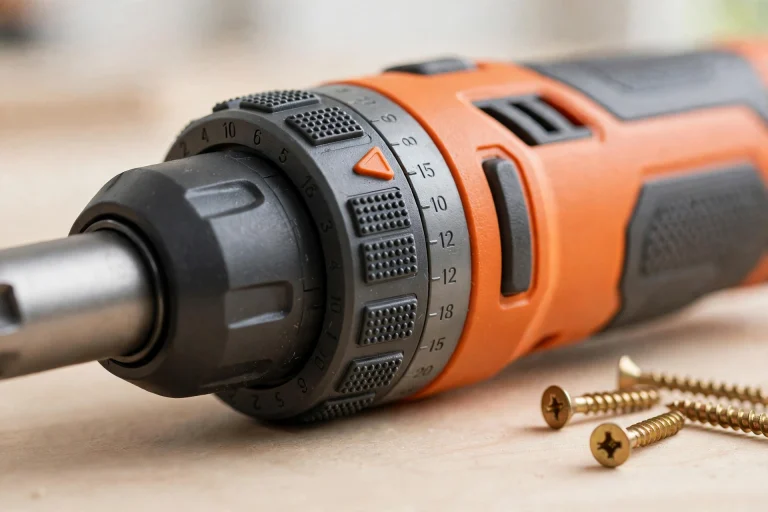
Low torque is the most important feature. A high torque setting can strip a small screw or crack a plastic part in a second. Look for a model with adjustable torque and a low minimum setting, plus variable speed so you can start slowly.
Precision bits
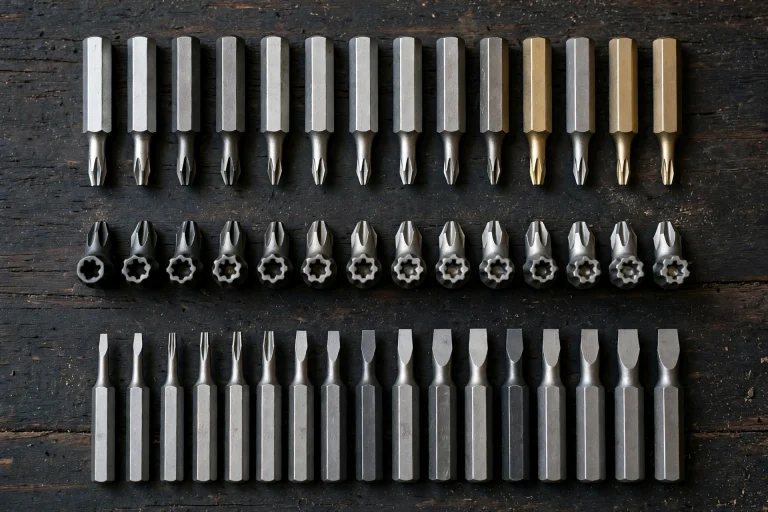
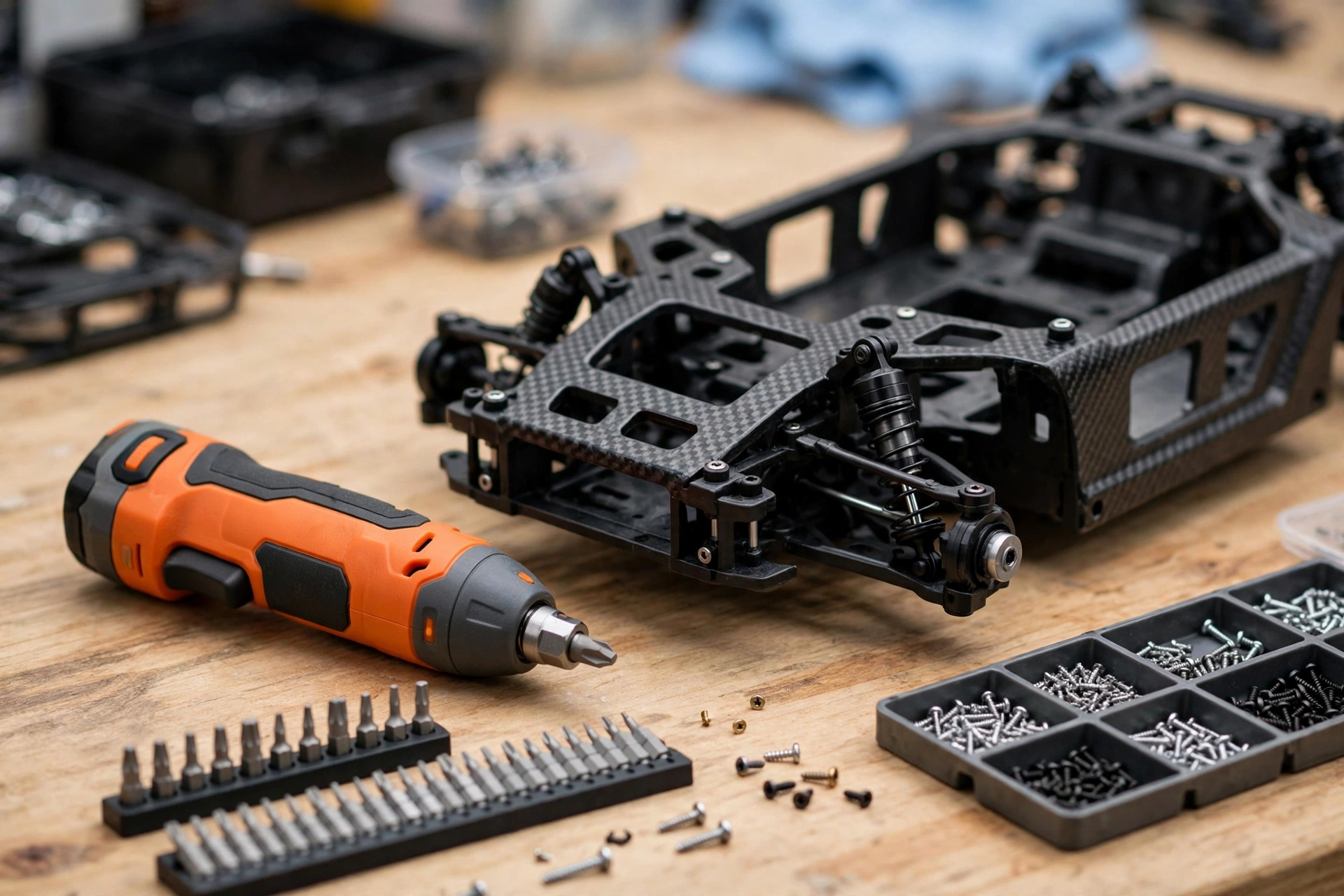
The tool should come with a set of small precision bits, or accept standard precision bits. Common types for RC cars include hex bits in 1.5 mm, 2.0 mm, and 2.5 mm, phillips PH0 and PH1, and torx T6 and T8. Check what bits are included before you buy. For more on bit types, see our guide to electric screwdriver bits.
Small grip and good light
You will hold the tool close to the car, often for a long time, and you will work in tight spaces around suspension arms, gears, and electronics. A small, light grip is easier to control than a large handle, and a built-in light helps you see the screw head inside a dark chassis. A magnetic bit holder is also useful, because it holds the tiny screw on the bit while you lift it out.
USB charging and a long battery life
Many precision electric screwdrivers charge by USB, which is handy if you work at a desk or at the track with a power bank nearby. Check the charging time and battery life in the listing before you buy, and charge the tool fully before you start a build.
Which bits do you need?
The bits you need depend on the car you own. Different brands and scales use different screws, and even two cars from the same brand can use different bits.
As a general guide, these bits cover most RC car work:
- Hex 1.5 mm, 2.0 mm, and 2.5 mm: the most common bits for RC cars, used for chassis screws, suspension parts, and motor mounts.
- Phillips PH0 and PH1: small phillips bits used for electronics, servo mounts, and body posts.
- Torx T6 and T8: star-shaped bits used in some cars, especially for motor and gearbox screws.
- Flat head 2.0 mm: a small flat bit used in some older cars and for body clips.
How to use an electric screwdriver for rc cars step by step
Work slowly, and follow the same steps each time. Rushing is how screws get stripped and parts get cracked.
1. Prepare the workspace
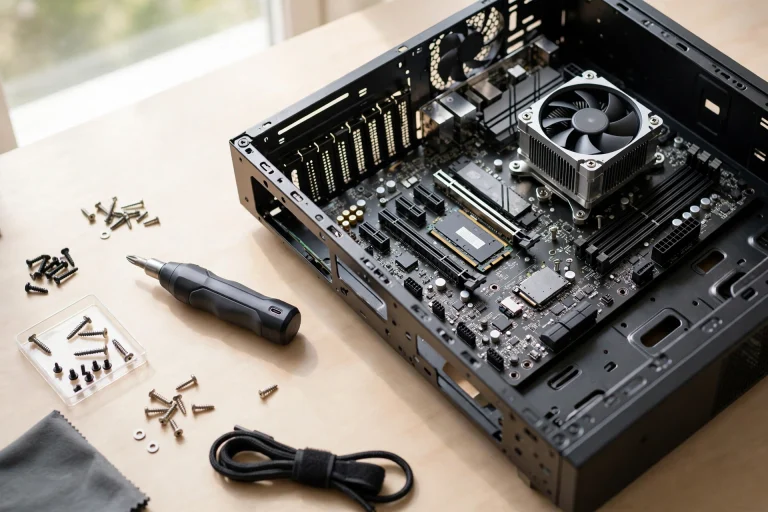
Work on a clean, dry table in good light. Put a white towel or a magnetic mat under the car, so small screws are easy to see and do not roll away. Lay out the bits you need, and keep a small tray or a piece of tape ready for the screws you remove.
Turn the car off, remove the battery, and unplug the electronics before you start.
2. Remove screws one at a time, in order
Find all the screws before you start removing them. Some are hidden under body posts, bumpers, or a battery tray, so check the manual for your exact model. Remove the screws one at a time, and put each one in the tray in the order you removed it.
Use the lowest torque setting, and start slowly. Let the bit sit in the screw head before you press the trigger, and hold the tool straight. If a screw will not turn, stop. Do not force it. Check that you have the right bit, and try turning it a little by hand first.
3. Work on the chassis and suspension
The chassis is the flat plate at the bottom of the car, and it holds the suspension, gearbox, and electronics. Use the electric screwdriver at the lowest torque setting for chassis screws, and stop as soon as each screw is snug. Plastic parts are easy to crack, so do not over-tighten.
4. Work on the electronics with care
The electronics in an RC car include the receiver, the speed controller, the servo, and the motor. These parts are delicate, and they are often held by small screws in plastic mounts. Use the lowest torque setting for these screws, and switch to a manual precision screwdriver for the smallest screws. An electric screwdriver is useful for removing the screws that hold the electronics in place, but the screws inside a servo or a receiver are too small for any powered tool.
Keep the battery and the charger away from the open car, and do not use the tool near a battery that is swollen or damaged. For more on working with small electronics, see our guide on electric screwdriver for electronics repair.
5. Put the car back together
Fit each screw in the right hole, and tighten it gently by hand first, then with the tool on its lowest torque setting. Stop when the screw is snug. Do not over-tighten, because that can strip the thread or crack the part.
If a screw needs threadlocker, use a small drop on the thread before you fit it, and let it dry before you run the car. Threadlocker stops screws vibrating loose, but it also makes them harder to remove, so use it only where the manual says to.
Common mistakes and how to avoid them
The most common mistake is using too much torque. A small screw in plastic needs very little force, and a tool on a high setting will strip the thread in a single turn. Use the lowest torque setting, start slowly, and stop as soon as the screw is snug.
The second mistake is using the wrong bit. A hex bit that is even slightly too small will spin in the screw head and strip it. Match the bit exactly, and replace bits that are worn or rounded. A good set of bits, kept in a case and replaced when they wear out, is worth more than a cheap set with many sizes.
The third mistake is forcing a stuck screw. A screw that will not turn may be glued with threadlocker, or it may be cross-threaded. Forcing it will strip the head.
The fourth mistake is working on a live car. Always remove the battery before you work on the car, and turn the transmitter off.
Comparison table: electric screwdriver vs manual screwdriver for rc cars
| Task | Electric screwdriver | Manual screwdriver | Best choice |
|---|---|---|---|
| Chassis screws | Yes, lowest torque | Yes, more control | Electric, then finish by hand |
| Suspension screws | Yes, lowest torque | Yes, more feel | Electric for speed, manual for final turn |
| Electronics screws | Sometimes, with care | Yes, safest | Manual for small screws |
| Motor mount screws | Yes, low torque | Yes | Electric, then check by hand |
| Stuck screws with threadlocker | No, too easy to strip | Yes, more control | Manual only |
| Body posts and clips | No, too delicate | Yes | Manual only |
For the basic steps, read our guide on how to use an electric screwdriver, and for the bits you will need, see our guide to electric screwdriver bits.
Frequently asked questions
Can I use a normal electric screwdriver for rc cars?
You can, but it is not the best choice. A normal model is too big and too strong for most RC screws, and it can strip them easily.
What is the best electric screwdriver for rc cars?
The best tool is a small precision model with low torque, variable speed, and a set of bits that includes hex 1.5 mm, 2.0 mm, and 2.5 mm, plus phillips PH0 and PH1.
What torque setting should I use for rc cars?
Use the lowest torque setting on your tool. Drive the screw until it is snug, then stop. If your tool does not have a low enough setting, use a manual screwdriver instead, especially for screws in plastic parts.
How do I remove a stripped screw from an rc car?
Stop as soon as you see the head is stripped, and do not keep running the tool. Try a slightly larger bit, or a rubber band pressed into the screw head for extra grip. If that does not work, use a screw extractor made for small screws, or ask a hobby shop for help. Do not drill the screw out unless you know how, because you can damage the part.
Should I use threadlocker on rc car screws?
Use threadlocker only where the manual says to, usually on metal-to-metal screws that vibrate loose, such as motor mount screws. Use a small drop, and do not use it on plastic parts, because it can damage the plastic.
Can an electric screwdriver damage my rc car?
Yes, if you use too much torque, the wrong bit, or you force a stuck screw. Use the lowest torque setting, match the bit exactly, hold the tool straight, and stop when the screw is snug.
Conclusion
An electric screwdriver for rc cars is a practical tool for hobby builds and repairs, but only if it is the right tool for the job. Choose a small, low-torque model with precision bits, variable speed, and a comfortable grip, and check that the bits match the screws in your car before you start.
Work slowly, keep the screws in order, use the lowest torque setting, and stop when the screw is snug. Do not force a stuck screw, do not work on a live car, and switch to a manual driver for the smallest screws and for the electronics. A good screwdriver set with precision bits, kept in a case where you can find each bit, is a useful starting point for any RC hobby toolkit.