Electric screwdriver vs manual screwdriver: which one to use and when
Quick answer: An electric screwdriver is faster and easier for many screws, such as furniture assembly, while a manual screwdriver gives more feel and control for one or two screws and delicate work. Choose the powered tool for repeated jobs and the hand tool for tiny screws, plastic, thin panels, or tight spaces. For most people, owning both covers everyday jobs best.
Every screwdriving job starts with the same simple choice: pick up a hand tool, or reach for a powered one. Both tools do the same basic job. The difference is not whether the screw goes in, but how fast it goes in, how much effort it takes, and how much control you have over the result.
The question of electric screwdriver vs manual screwdriver matters because the wrong choice can turn a five-minute job into a frustrating one. Use a manual screwdriver for a long run of screws and your wrist will feel it. Use a powered tool for a single tiny screw and you can strip the head before you have time to react.
What is a manual screwdriver?
A manual screwdriver is the classic hand tool: a handle, a shaft, and a tip shaped to fit a screw head, such as Phillips, flathead, Torx, or hex. You turn it by hand, and the turning force comes entirely from your wrist and forearm. There is no battery, no motor, no charger, and no switch to learn.
Manual screwdrivers come in many sizes. A large one gives you more leverage for a stubborn screw, while a small precision screwdriver fits the tiny screws in glasses, watches, toys, and electronics.
The main strength of a manual screwdriver is feel. Because your hand is doing the work, you can sense exactly how much resistance the screw is meeting. You can feel when a thread starts to bite, when a screw is almost seated, and when it is starting to slip. That feedback makes it the safest choice for delicate work. It is also always ready, with no charging needed.
What is an electric screwdriver?
An electric screwdriver is a compact powered tool that turns the bit for you. You hold the tool, line up the bit with the screw, press a button or trigger, and the motor drives the screw in or out.
The main strength of an electric screwdriver is speed and ease. It can drive a screw in a few seconds, and it can do the same again and again without tiring your wrist. For a job with ten, twenty, or fifty screws, that difference is large. What would take half an hour by hand can take a few minutes with a powered tool.
Most electric screwdrivers also have a clutch with adjustable torque settings. The clutch limits how much turning force the tool applies, and it slips when the screw reaches the set depth. That helps prevent overdriving, when a screw is driven too far into soft material. Electric screwdrivers suit everyday screws such as furniture, hinges, handles, and small appliances.
electric screwdriver vs manual screwdriver: the key differences
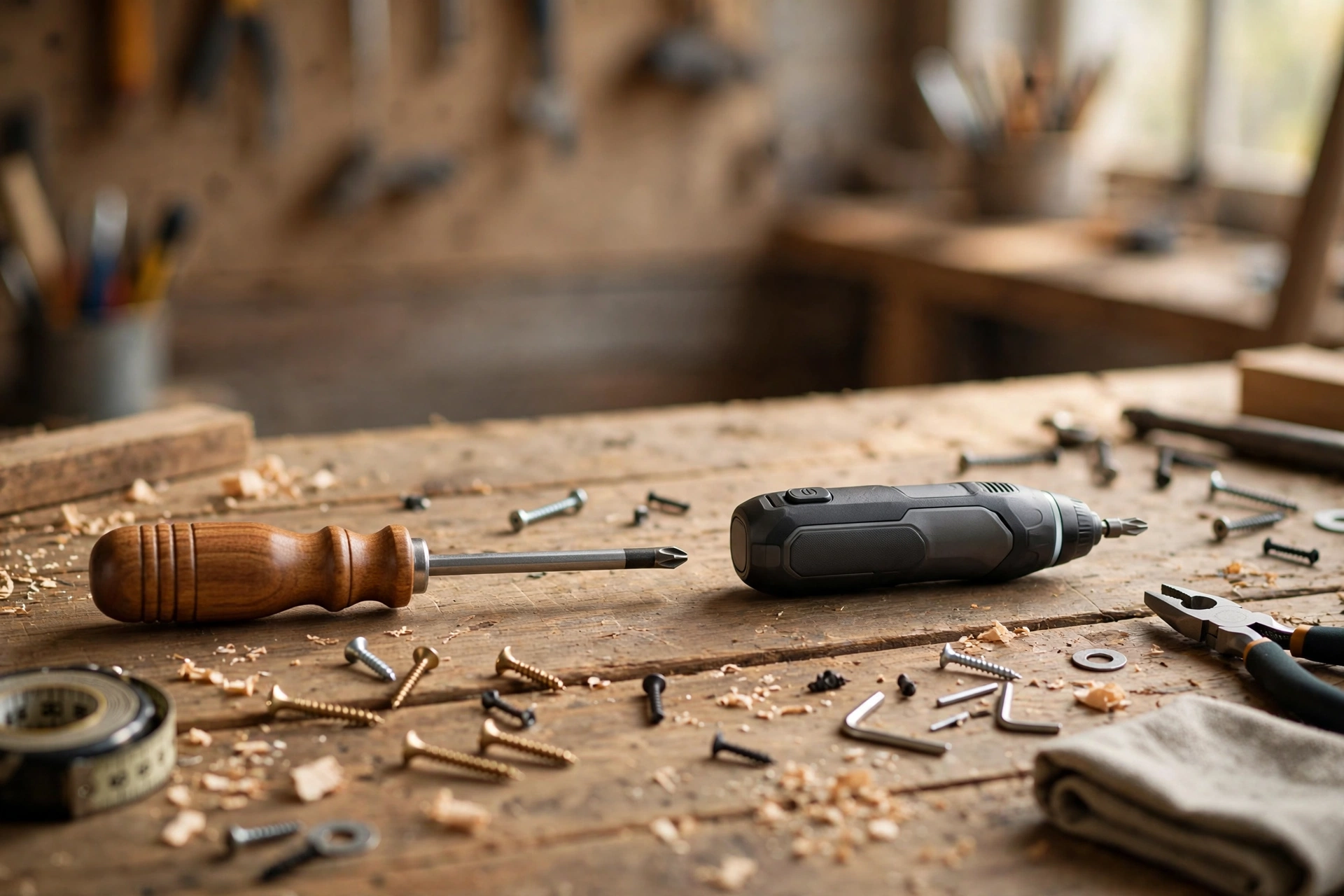
The clearest way to understand electric screwdriver vs manual screwdriver is to compare them side by side. They can both drive the same screw, but they do it in very different ways.
| Feature | Electric screwdriver | Manual screwdriver |
|---|---|---|
| Speed | Fast, drives a screw in seconds | Slow, each turn is done by hand |
| Control and feel | Good with a clutch, less direct feel | Excellent, you feel every turn |
| Torque | Steady motor torque, adjustable | Limited by hand strength |
| Fatigue | Low, the motor does the work | High on long jobs, wrist tires |
| Cost | Higher, plus battery and charging | Low, often a few pounds or dollars |
| Best uses | Furniture, many screws, repeated jobs | One or two screws, delicate work |
| Readiness | Needs a charged battery | Always ready, no charging needed |
| Noise | Low, quiet motor hum | Silent |
Which one is faster?
Speed is the most obvious difference in electric screwdriver vs manual screwdriver. An electric screwdriver turns the bit at a steady speed, so a short screw can be fully driven in two or three seconds. A manual screwdriver needs many turns of the wrist for the same screw, and each turn takes time and effort.
The gap grows with the number of screws. For one screw, the difference is small. You pick up the manual tool, turn it a few times, and the job is done before you would have found the charger. For twenty screws, the difference is large.
Torque, control and the risk of damage
Torque is the turning force applied to a screw, and control is your ability to stop at the right moment. Together, they decide whether a screw is driven cleanly or damaged, and they are central to electric screwdriver vs manual screwdriver.
A manual screwdriver gives you the most direct control. Your hand feels the resistance rise as the screw seats, and you can stop turning at once. That makes it the safest tool for small screws in plastic, soft wood, electronics, and thin panels.
An electric screwdriver gives you good control if you use it well, but the control is less direct. The motor keeps turning while the trigger is pressed, so you need to release it at the right moment. A clutch helps, because it slips when the set torque is reached, and choosing a low torque setting is the key to safe use on small screws. Our guide to electric screwdriver torque settings explains how the settings work and how to choose a low setting for delicate work.
Comfort, fatigue and ease of use
Comfort is where the powered tool has a clear advantage on longer jobs. Driving screws by hand uses the small muscles of the wrist and forearm, and those muscles tire quickly. After ten or twenty screws, your grip weakens, your turns become slower, and the chance of slipping rises. For anyone with wrist pain, arthritis, or a weak grip, hand turning can be painful even on a short job.
An electric screwdriver removes most of that strain. The motor does the turning, and your hand only needs to hold the tool steady and guide the bit. For furniture assembly and shelving, the difference in comfort is often the main reason people buy one. Our guide on how to use an electric screwdriver covers the basics, including lining up the bit and keeping the tool straight.
When is a manual screwdriver better?
A manual screwdriver is the better choice when control matters more than speed, or when there are only one or two screws to drive. These jobs suit the hand tool best:
- Driving one or two screws, where finding a powered tool would take longer than the job
- Working on small electronics, glasses, watches, toys, and small appliances with tiny screws
- Driving screws in plastic, thin panels, or soft material that can crack or split
- Working in a tight space where a powered tool will not fit
- Making a small adjustment, such as tightening a hinge, a handle, or a loose screw
A manual screwdriver is also better when you want to feel the screw seating. For a hinge that needs to sit flush, the direct feedback from your hand helps you stop at exactly the right point. A mini electric screwdriver can also suit precision work, because it is slim and gentle, but for the smallest screws, many people still prefer the feel of a hand tool.
When is an electric screwdriver better?
An electric screwdriver is the better choice when there are many screws to drive, or when the job would tire your wrist. These jobs suit the powered tool best:
- Assembling flat-pack furniture, shelves, cabinets, and storage units
- Driving a long run of screws in a DIY project, such as fitting brackets or panels
- Working with medium screws in wood, plasterboard, or chipboard
- Repeating the same screwdriving task many times, for example in a workshop
- Driving screws overhead or in an awkward position, where hand turning is tiring
An electric screwdriver is also better when consistency matters. Because the motor turns at a steady speed and the clutch limits the torque, each screw is driven in much the same way, so a row of brackets or hinges sits at the same depth. For larger and heavier work, neither tool may be right. A comparison of electric screwdriver vs drill explains when a drill is needed, and a comparison of electric screwdriver vs impact driver explains when extra impact power suits long screws in tough material.
Which one should you buy first?
For most households, the sensible starting point is a good manual screwdriver set. It is cheap, it covers the small jobs that come up most often, and it is always ready. A set with Phillips, flathead, and Torx tips in a few sizes will handle hinges, handles, covers, toys, and small repairs.
After that, add an electric screwdriver when you start doing jobs with many screws. If you assemble flat-pack furniture, fit shelving, or take on small DIY projects, a powered tool will save time and spare your wrist. It is the tool you will reach for week after week once you own one. If you already do a lot of DIY, you can buy the electric screwdriver first and keep a cheap manual set as a backup.
Frequently asked questions
Is an electric screwdriver better than a manual screwdriver?
It depends on the job. An electric screwdriver is better for many screws, long screws, and jobs where speed and comfort matter. A manual screwdriver is better for one or two screws, delicate work, and tight spaces where feel and control matter most.
Can an electric screwdriver strip screws more easily than a manual screwdriver?
Yes, it can, if the torque is set too high or the trigger is held for too long. The motor keeps turning while the trigger is pressed, so a small screw can be overdriven in a fraction of a second. To reduce the risk, use a low torque setting and release the trigger as soon as the screw is seated.
When should I use a manual screwdriver instead of an electric screwdriver?
Use a manual screwdriver for a single screw, for tiny screws in electronics or glasses, for screws in plastic or thin material, and for work in a tight space where a powered tool will not fit.
Is a manual screwdriver enough for furniture assembly?
A manual screwdriver can assemble flat-pack furniture, and many people have done it that way for years. It will take longer, and your wrist will tire, especially on a large item with dozens of screws. An electric screwdriver makes the same job faster and much more comfortable, and it gives a more consistent result.
Do I need a battery or charger for a manual screwdriver?
No. A manual screwdriver has no battery, no motor, and no charger. It is always ready to use, it never runs flat, and it works anywhere.
Which tool is safer for delicate work such as electronics?
A manual screwdriver is usually safer for delicate work, because you can feel the resistance and stop before a small screw strips or a plastic case cracks. A small powered tool can also work if it has a low torque setting and you use a gentle touch, but the margin for error is smaller.
Conclusion
The choice in electric screwdriver vs manual screwdriver is not about picking a winner. It is about matching the tool to the job. The electric screwdriver is the tool for speed, comfort, and repeated work: it drives screws quickly, it spares your wrist, and it gives a consistent result on furniture, fittings, and long runs of screws. The manual screwdriver is the tool for feel, control, and simplicity: it is cheap, silent, always ready, and it lets you sense exactly when a screw is seated.
For most people, the best answer is to own both: a manual set for the single screw and the delicate repair, and an electric screwdriver for furniture assembly and any job with many screws. In short, electric screwdriver vs manual screwdriver is a choice to make job by job, based on how many screws there are and how delicate the work is.