Electric screwdriver accessories: cases, chargers, extensions and more
Quick answer: Start with a storage case, a magnetic bit holder and a magnetic tray. Add a spare battery for long jobs, an extension for deep or tight spaces, and a work light for dark places. Buy accessories only when they solve a real problem, and skip large bit sets and extras you will never use.
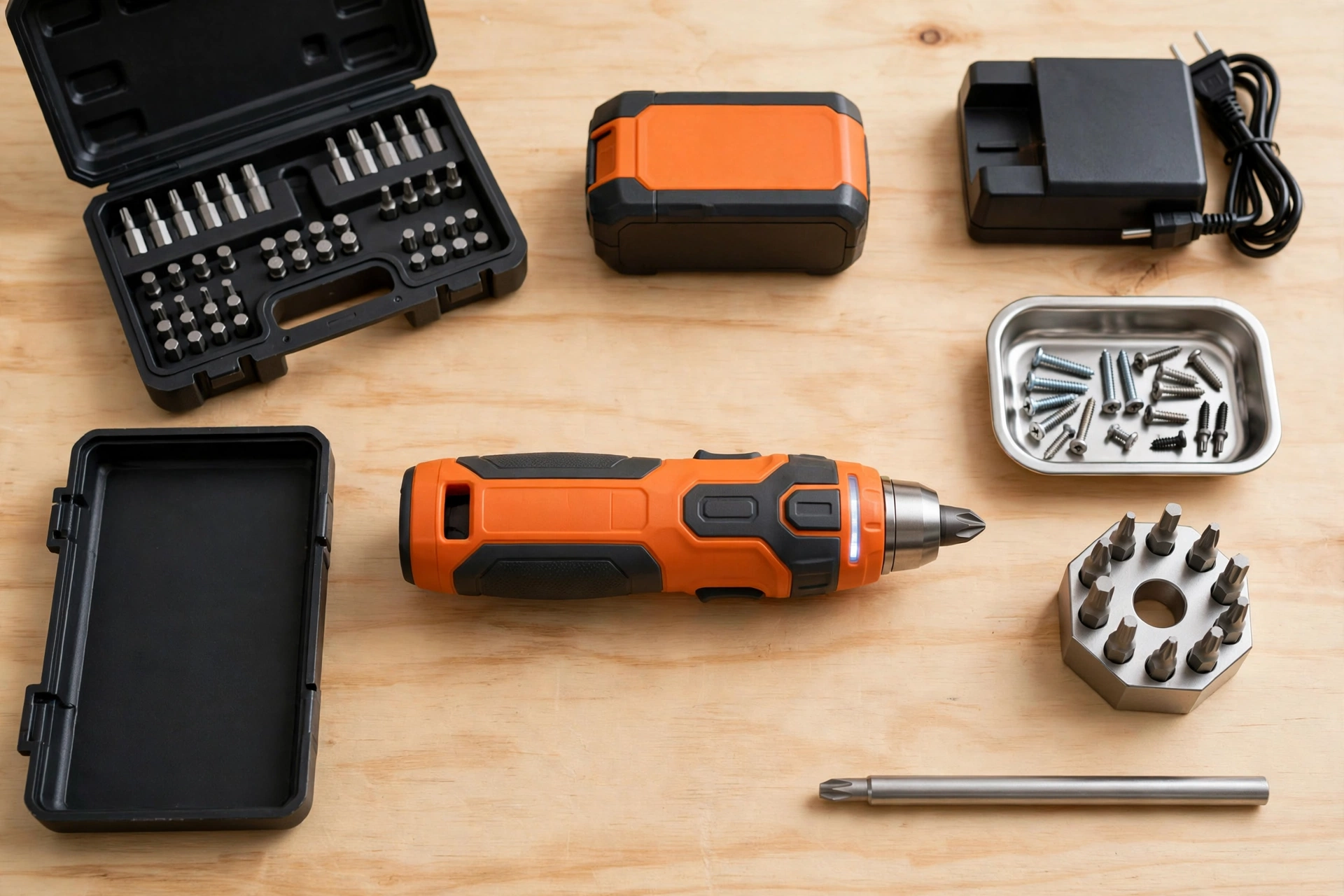
electric screwdriver accessories are the extras that make the tool easier to use, easier to carry, and easier to look after. The tool itself does the turning, but a good case keeps it safe, a spare battery keeps you working, a bit holder reaches screws a short tool cannot, and a magnetic tray stops small screws disappearing across the workbench. Bought well, accessories save time and frustration. Bought badly, they sit in a drawer and never get used.
This guide explains which electric screwdriver accessories are worth buying, what to look for in each one, and which ones you can skip. It covers storage, power, reach, organisation, light, and cleaning and maintenance. It does not cover bit types in depth — for that, see our guide to electric screwdriver bits. Bits are mentioned here only as one accessory among others.
If you have not chosen a tool yet, start with our guide on the electric screwdriver.
Storage cases and bags
A case is the first accessory worth buying, and often the most useful. An electric screwdriver left loose in a toolbox gets knocked around, and its bits get lost. A case keeps the tool, the bits, and the charger together, and it stops the tool getting damaged in transit.
Hard cases are made from plastic or metal, and they protect the tool well. They usually have moulded slots or foam inserts that hold the tool and each bit in place, so you can see at a glance what is missing. A hard case is the best choice if you carry the tool to different jobs, or if you store it in a busy workshop.
Soft cases and bags are lighter and easier to carry, and they often have pockets for the charger, the manual, and spare bits. They protect the tool less well than a hard case, but they are easier to fit into a larger toolbox or a car boot. A soft case is a good choice if you use the tool at home and carry it only occasionally.
When you choose a case, check that it fits your tool and the accessories you own. A case that is too small will not close, and a case that is too large will let the tool slide around inside. Look for a case with labelled slots for bits, a pocket for the charger, and a handle or a strap that feels comfortable. A case that closes firmly and keeps out dust is also useful if you work in a dusty workshop.
Chargers and spare batteries
A charger is an accessory you may already own, because most electric screwdrivers come with one. Even so, it is worth knowing what to look for, because a spare charger or a spare battery can keep you working when the first battery runs flat.
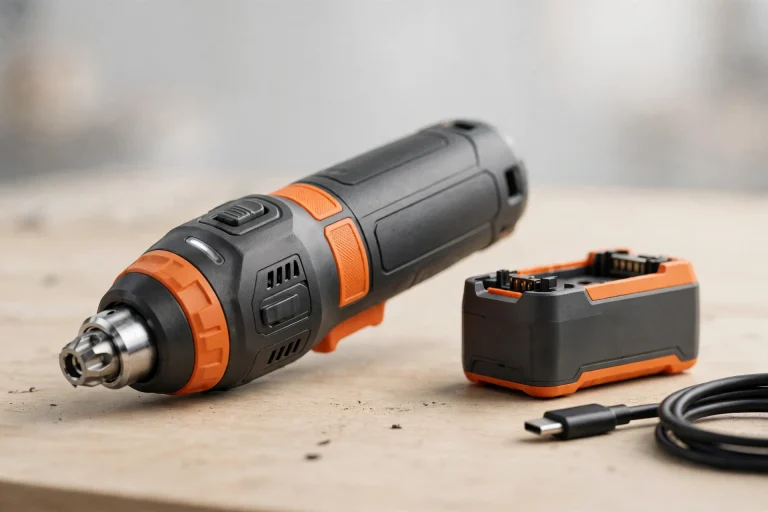
Most modern electric screwdrivers use a rechargeable lithium-ion battery, charged by USB, by a charging dock, or by a separate charger for a removable battery.
A spare battery is worth buying if you use the tool for long jobs, such as assembling furniture or building a project, where a flat battery in the middle of the job is frustrating.
For the full charging routine, see our guide on how to charge an electric screwdriver, which explains charging times, charging lights, and battery care in detail.
Bit holders and extensions
A bit holder is a short extension that holds the bit and fits into the tool. It is useful when the screw is in a deep hole or a tight space, where the tool itself cannot reach. A magnetic bit holder is the most common type, and it holds the bit firmly and stops it falling out. A quick-release bit holder lets you change bits with one hand, which is handy when you are working on a ladder or holding a piece of wood steady.
Extensions come in different lengths, usually from 50 mm to 300 mm. A short extension is enough for most jobs, such as reaching a screw inside a cabinet or behind a panel.
When you buy a bit holder or an extension, check the shank size. Most electric screwdrivers use a 1/4-inch hex shank, and the holder must match.
Magnetic trays and parts organisers
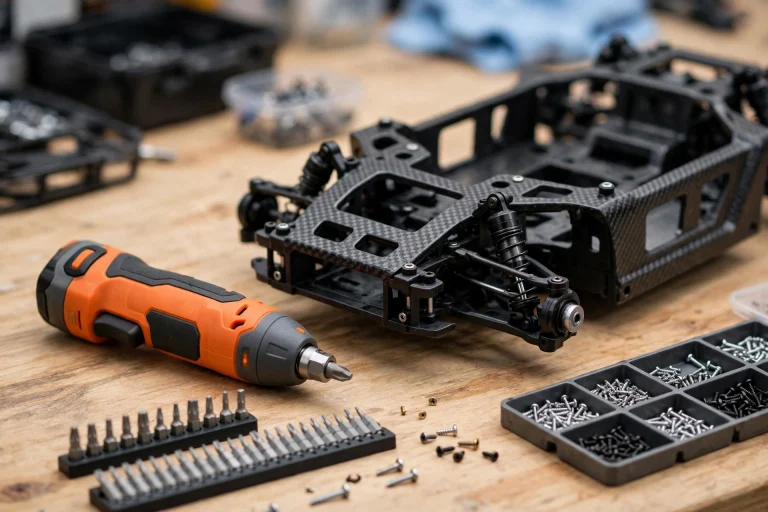
Small screws are easy to lose, and a magnetic tray is a simple accessory that stops them disappearing. A magnetic tray is a shallow metal dish with a magnet in the base, and it holds screws, bits, and small parts in place while you work. Put the tray on the workbench, and drop each screw into it as you remove it. The magnet stops the screws rolling away, and the tray keeps them in one place.
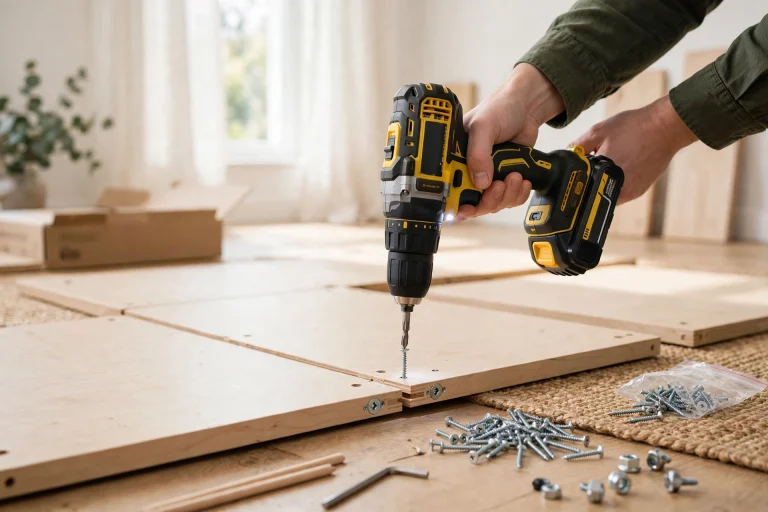
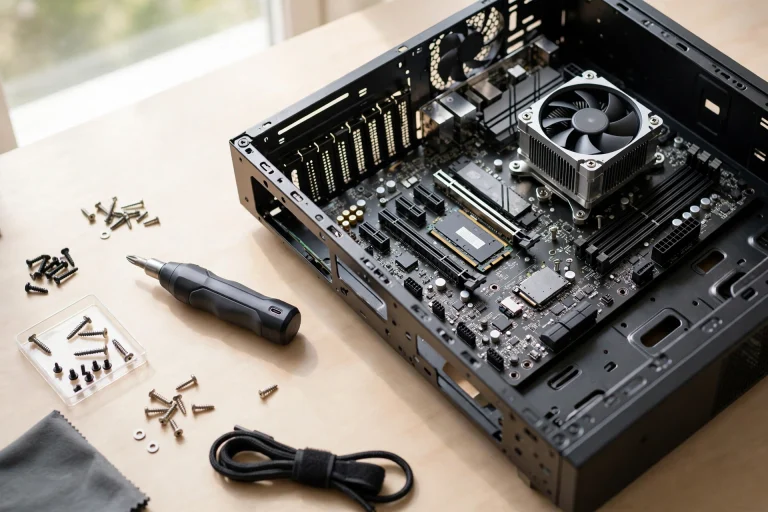
A parts organiser is a box with separate compartments, and it is useful for keeping screws sorted by size and type. Use one when you are working on a project with many different screws, such as a PC build, an RC car, or a piece of furniture. Label each compartment with a pen, so you know which screws go where.
Work lights
A work light is useful when you are working in a dark space, such as inside a wardrobe, under a desk, or in a corner of a workshop. Many electric screwdrivers have a small light built into the tool, but it is often weak, and it only lights the screw you are working on. A separate work light gives you more light and lets you see the whole job.
A headlamp leaves both hands free, and a small torch with a magnetic base can be stuck to a metal surface and aimed at the work.
When you choose a work light, look for one with adjustable brightness, a long battery life, and a way to mount it or wear it. A light that is too bright can be as bad as no light at all, because it creates glare. A light with a warm colour is often easier on the eyes than a harsh white light, especially if you work for a long time.
Cleaning and maintenance items
An electric screwdriver needs little maintenance, but a few simple items will keep it working well. A soft brush is useful for cleaning sawdust and dust out of the bit holder and the vents, and a dry cloth is useful for wiping the tool after use. Do not use water or a damp cloth on the tool, and do not blow compressed air into the vents unless the maker's guide says it is safe, because it can push dust further inside.
Keep a few spare bits in the case, because a worn bit is one of the most common causes of stripped screw heads. Check the bits regularly, and replace any that are rounded, chipped, or bent. A bit that is damaged will slip in the screw head, and it can also damage the screw head beyond repair.
What you can skip
Not every accessory is worth buying. A large set of bits with many sizes you will never use is less useful than a smaller set with the right sizes for your work. A flexible shaft is useful only if you work in tight spaces. A magnetic wristband is useful only if you work away from a bench. A work light on a stand is useful only if you work on large projects.
Before you buy an accessory, ask yourself whether you have needed it in the last few jobs. If you have not, you probably do not need it yet. Buy the accessories that solve a problem you actually have, such as a case that keeps the tool safe, a spare battery that keeps you working, or a magnetic tray that stops screws disappearing. Add the rest later, when the work calls for them.
Comparison table: which accessories are worth buying first
| Accessory | What it does | Best for | Worth buying first? |
|---|---|---|---|
| Hard storage case | Protects tool and bits | Carrying and storing the tool | Yes, buy first |
| Spare battery | Keeps you working when the first runs flat | Long jobs | Yes, if you do long jobs |
| Magnetic bit holder | Holds the bit and reaches deep screws | Tight spaces and deep holes | Yes, cheap and useful |
| Extension, 50-100 mm | Reaches screws the tool cannot | Cabinets and deep holes | Yes, if you need the reach |
| Magnetic tray | Stops small screws rolling away | Any job with many screws | Yes, cheap and useful |
| Parts organiser | Keeps screws sorted by size | Projects with many screw types | Yes, if you do varied work |
| Headlamp or work light | Lights dark spaces, hands free | Wardrobes, under desks, workshops | Yes, if you work in dark spaces |
| Flexible shaft | Reaches around corners | Tight, curved spaces | Only if you need it |
| Screw extractor set | Removes stripped screws | Rescue work | Useful to have, rarely used |
| Cleaning brush and cloth | Keeps tool and bits clean | After every job | Yes, cheap and useful |
Frequently asked questions
What accessories do I need for an electric screwdriver?
Start with a storage case, a magnetic bit holder, and a magnetic tray. Add a spare battery if you do long jobs, an extension if you work in deep or tight spaces, and a work light if you work in dark places. A parts organiser is useful if you work with many different screws.
Is a spare battery worth buying?
Yes, if you use the tool for long jobs, such as assembling furniture or building a project, where a flat battery in the middle of the job is frustrating.
What is a bit holder for?
A bit holder is a short extension that holds the bit and fits into the tool. It reaches screws in deep holes or tight spaces where the tool itself cannot reach.
Do I need a flexible shaft?
Only if you work in tight, curved spaces, such as inside a computer case or a piece of furniture.
How do I keep small screws from getting lost?
Use a magnetic tray on the workbench, or a parts organiser with separate compartments for different screw sizes.
How do I look after my electric screwdriver accessories?
Wipe the tool and the bits clean after each job, store them in their case, and replace bits that are worn or damaged. Charge the battery after use, and store the tool and its charger together in a dry place.
Conclusion
electric screwdriver accessories are worth buying when they solve a real problem in your work. A case protects the tool, a spare battery keeps you working, a bit holder reaches screws the tool cannot, and a magnetic tray stops small screws disappearing. A work light, a parts organiser, and a few cleaning items make the job easier and keep the tool in good shape.
A good way to build your kit is to start with the case, the bit holder, and the magnetic tray, then add a spare battery and a work light once you know you need them. Buy accessories made for your exact tool model, keep them in the case with the tool, and check them when you check the tool itself. An accessory that lives with the tool gets used. One that lives in a drawer does not, so keep the kit small, keep it together, and add to it only when a job shows you what is missing.
For help choosing the tool itself, read our guide to the electric screwdriver. A good screwdriver set with a case, a range of bits, and a manual driver for finishing is a useful starting point for any home toolkit, and for choosing between tools, see our guide to the best electric screwdriver.