Electric screwdriver battery replacement: when to replace and how to choose one
Quick answer: If the battery runs flat quickly or the motor slows under load, the battery is probably dying. A matching removable battery can bring a good tool back to life cheaply, but if the battery costs nearly as much as a new tool or is sealed inside, a new tool is usually smarter. Never open a battery pack or use a swollen or leaking battery.
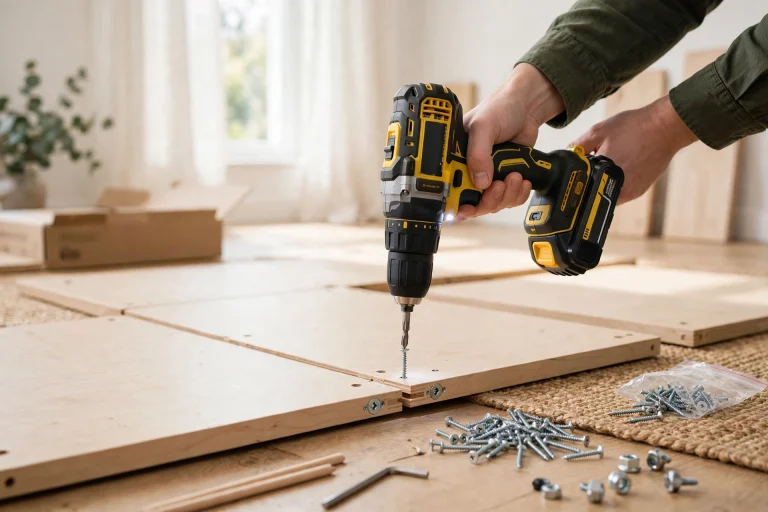
An electric screwdriver that used to last a whole afternoon of flat-pack furniture and now dies after a few screws is usually not broken. More often, the battery has reached the end of its life. Batteries wear out with every charge cycle, and when they do, the tool loses power, runs flat quickly, and eventually refuses to hold a charge at all. That is the point where electric screwdriver battery replacement becomes the question — and the answer is not always the same. Sometimes a new battery brings a good tool back to life cheaply. Sometimes the battery costs almost as much as a new tool, and replacing the tool is smarter. This guide explains how to tell the difference. See our main electric screwdriver guide for an overview.
How to tell if your battery is dying
The clearest warning is a short run time. If a screwdriver that once drove dozens of screws on a single charge now manages only a handful before the motor slows, the battery is probably no longer holding its full charge. A battery that charges very quickly and then dies just as quickly is another classic sign of a shallow charge.
Watch how the tool behaves under load. A healthy battery keeps the motor turning at a steady speed while the screw goes in. A dying battery makes the motor slow noticeably as soon as the screw meets resistance, or stall on screws it used to drive without effort. The screwdriver may also cut out under load and then work again after a few seconds of rest, and the charger light may never show a full charge. A swollen battery pack, a battery that feels hot to the touch, or any leaking fluid are serious signs: stop using the tool straight away.
Before deciding the battery is dead, rule out the simple causes: a dirty or loose connection between the battery and the tool, or between the battery and the charger, can mimic a dying battery, so check the contacts are clean and the battery clicks firmly into place. A faulty charger can look exactly like a faulty battery, too. Our guide to electric screwdriver not working walks through these checks, and our guide to how to charge an electric screwdriver explains normal charging behaviour.
Built-in vs removable batteries
Not every electric screwdriver battery can be replaced in the same way. Many compact and budget models have a built-in battery sealed inside the tool body, with no pack to slide out and swap. If the battery in one of these tools dies, the maker may offer a repair or replacement service, or the tool may simply be at the end of its life. Opening the case to fit a new cell is not a job for most people: it usually voids the warranty and carries a real safety risk.
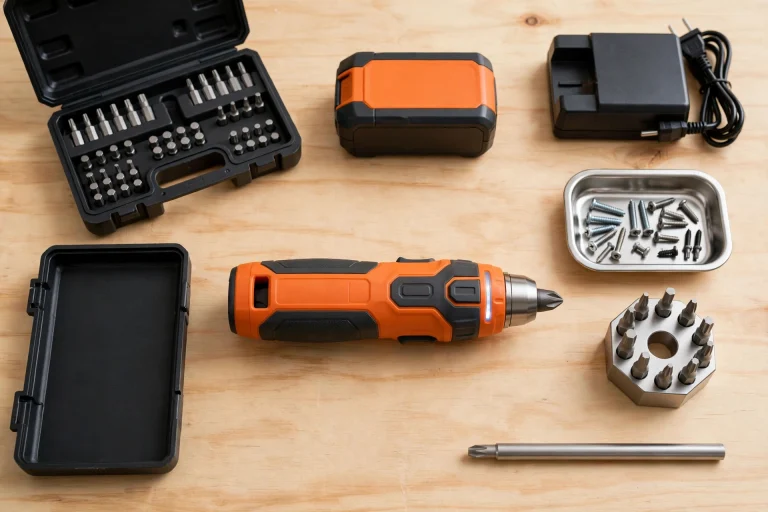
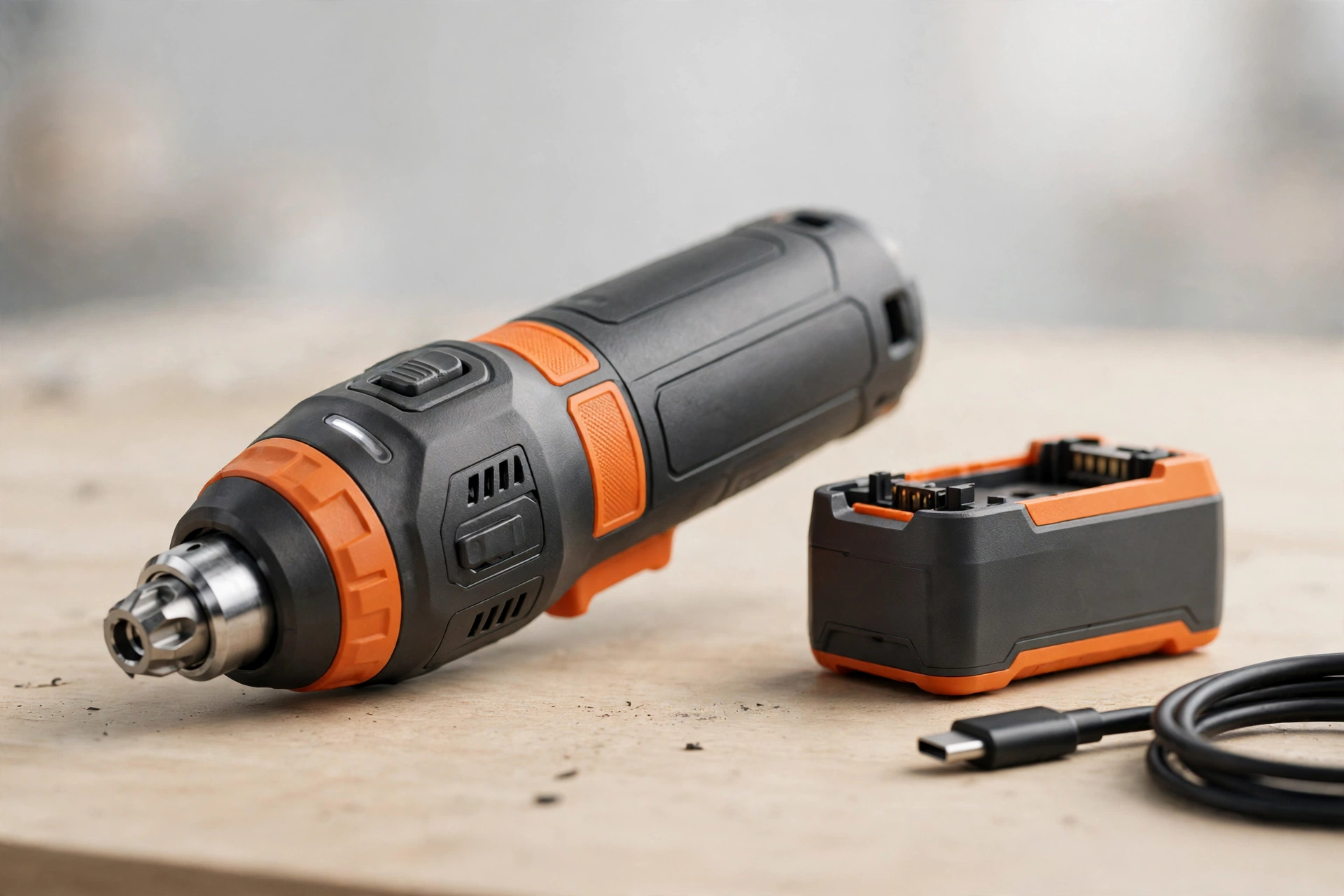
Larger models often use a removable battery pack that slides or clicks into the handle or base. These are designed to be swapped, so a replacement is usually straightforward: buy a matching pack, slide the old one out, and slide the new one in. Some brands sell spare packs directly, and some tools share a battery system with other tools from the same brand.
If you are shopping for a new tool, check this before you buy: a removable battery is easier to replace and keep a spare for, while a built-in battery keeps the tool smaller and lighter. Check the manual or the maker’s website: it will say whether the battery is user-replaceable and which pack fits your model. This applies to full-size tools and to a compact mini electric screwdriver alike.
How to find the right replacement battery
Getting the wrong battery is the most common mistake in electric screwdriver battery replacement, and it is usually avoidable. The right battery is the one that matches your exact tool, not just one that looks similar. Start with the maker and model name, printed on the tool body, the battery pack, or the manual, and search the maker’s website for the replacement battery for that model. The part number they list is the one to match.
If the maker no longer sells a battery for your model, a compatible battery from a reputable third-party supplier is the next option. Check four things before buying:
- Battery type — such as lithium-ion or nickel-cadmium — should match what the tool was designed for, because different types charge and behave differently.
- Voltage should match exactly. A higher voltage can damage the motor, and a lower one will leave the tool underpowered.
- Connector shape and the way the pack locks into the tool must match, or the battery will not fit.
- Physical size must be right, since packs that look the same in a photo can differ by a few millimetres.
Be careful with very cheap unbranded batteries: they may use lower-quality cells, hold their charge poorly, and lack the same safety protections. Buy from a supplier that accepts returns.
Safety warnings: read this before you touch a battery
Batteries store a lot of energy in a small space, and a damaged one can be dangerous. These rules apply to every electric screwdriver battery replacement, whatever the tool.
Do not open a battery pack: the cells inside are not meant to be serviced by the user, and opening a sealed pack can damage the cells or expose you to chemicals. If a pack is swollen, cracked, leaking, or hot, do not use it and do not try to open it. Put it somewhere safe, away from flammable material, and take it to a battery recycling point as soon as you can.
Do not puncture, crush, bend, or burn a battery, and do not throw batteries in a fire or in ordinary household rubbish: a punctured lithium battery can catch fire, and one crushed in a waste truck can start a fire. Take old batteries to a recycling point instead.
Stop using a swollen or leaking battery immediately. Swelling means gas is building up inside the pack, and leaking fluid is corrosive — do not touch it with bare hands, and wash it off with plenty of water if it gets on your skin. If a battery is very hot, smoking, or smells strongly of chemicals, move it away from anything flammable if it is safe to do so, and do not charge it again. Charge batteries only with the charger supplied with the tool, or a charger the maker says is compatible.
Replacement battery vs a new tool
The decision usually comes down to cost, and it depends on the tool. A replacement battery for a low-cost screwdriver can cost nearly as much as the tool itself, while a battery for a better-known brand is often a smaller share of a new tool’s price.
| Factor | Replacement battery | New tool |
|---|---|---|
| Typical cost | Often a large share of the tool’s price | Full price, but with a new motor and warranty |
| Effort | Low for removable packs; impossible for sealed ones | None — unbox, charge, and use |
| Tool condition | Worth it if the motor, chuck, and body are in good shape | Better if the tool is worn, damaged, or outdated |
| Warranty | Covered by the battery seller for a limited period | A new tool usually comes with a full warranty |
| Waste | Less waste: you keep a working tool in use | More waste, though old tools and batteries can be recycled |
| Future spares | Harder if the maker has stopped supporting your model | Easier while the model is current |
As a rough guide, replacement is usually worth it when the battery costs well under half the price of a comparable new tool, the tool is still in good condition, and the replacement is easy to fit. It is usually not worth it when the battery costs close to the price of a new tool, the tool is worn or damaged, the maker no longer supports the model, or the battery is sealed inside. In that last case, a new tool is often the only practical option, and our guide to the best electric screwdriver can help you choose a replacement that suits the work you do.
How to fit a removable replacement battery
Fitting a removable pack is usually simple, but it is worth doing carefully. First, make sure the tool is switched off. Slide or unclip the old battery and set it aside for recycling. Check that the contacts on the tool and on the new battery are clean and undamaged. Slide the new battery into place until it clicks or locks firmly — a battery that is not fully seated can lose contact during use. Charge the new battery fully before the first use, and test the tool on a few screws before starting a real job. If it does not work, remove the battery, check the fit and contacts again, and contact the seller. Do not force a battery that does not fit: a pack that needs forcing is the wrong pack.
If your tool has a built-in battery and the maker offers a repair service, use it rather than opening the case. If no service is available, recycling the tool and buying a replacement is the safer choice. Good technique also protects a new battery — see how to use an electric screwdriver.
Frequently asked questions
How do I know if my electric screwdriver battery needs replacing?
The most reliable signs are a much shorter run time than when the tool was new, a battery that charges quickly and then dies quickly, and a motor that slows or stalls under load. If loose contacts and a faulty charger have been ruled out, the battery is the most likely cause.
Can I replace the battery in any electric screwdriver?
No. Tools with a removable battery pack are designed for electric screwdriver battery replacement, and swapping the pack is usually easy. Tools with a sealed built-in battery are not designed to be opened by the user, and replacing the battery may need a repair service or may not be possible at all.
How do I find the right battery for my model?
Use the maker and model name from the tool body, battery pack, or manual, and look up the replacement battery on the maker’s website. Match the part number, battery type, voltage, connector shape, and physical size, and buy from a seller that accepts returns.
Is it cheaper to replace the battery or buy a new screwdriver?
It depends on the tool. Replacement is usually cheaper when the battery costs well under half the price of a comparable new tool and the tool itself is still in good condition. It is usually not worth it when the battery costs almost as much as a new tool, or when the tool is worn or damaged.
What should I do with a swollen or leaking battery?
Stop using it immediately and do not charge it or try to open it. Keep it away from flammable material and take it to a battery recycling point as soon as you can. If leaking fluid touches your skin, wash it off with plenty of water. A swollen battery should never be used again.
How long should a replacement battery last?
That depends on how often and how hard you use the tool, and how you store and charge it. A battery used lightly and stored in a cool, dry place will last longer than one used daily on heavy work or left in a hot car.
Conclusion
Electric screwdriver battery replacement is a simple decision once you know what you are looking at. A dying battery shows itself through short run times, fast charging followed by fast dying, and a motor that slows under load. If your tool has a removable pack, a matching replacement can bring it back to life at a fraction of the cost of a new tool, provided you match the maker, model, battery type, voltage, and connector. If the battery is sealed inside, the choice is between a repair service and a new tool, depending on the cost and the condition of the tool you own. Whatever you decide, never open a battery pack, never use a swollen or leaking battery, and recycle old batteries properly.