Electric screwdriver safety tips: how to work safely at home
Quick answer: Wear safety glasses, check the tool, battery and bit before you start, and keep fingers clear of the bit while it is turning. Charge only with the correct charger, stop using a swollen or damaged battery, and switch the power off before screwing near sockets or wiring.
An electric screwdriver is one of the gentlest power tools you can own. It is small, quiet, and made for light work around the house, yet it still spins a metal bit with enough force to hurt a finger or throw a small piece of debris into your eye. Most accidents happen in ordinary moments: a bit slips, or someone reaches for a screw while the tool is still running. Almost all of them are easy to prevent.
These electric screwdriver safety tips cover the whole job, from checking the tool before you start, to holding it correctly, looking after the battery, and putting everything away safely. If you are new to the tool, read the guide on how to use an electric screwdriver first, then treat this page as your safety checklist.
Before you start: check the tool and the workspace
Check that the casing is not cracked, the bit holder is not loose, and the trigger and direction switch move cleanly and spring back as they should. If the tool rattles, smells of burning, gets hot without being used, or only works when you hold it at an angle, stop and treat it as a fault. The guide on electric screwdriver not working explains common causes, but a damaged tool should not be forced back into use. Check the battery too: it should click firmly into place and not wobble. Never use a battery that is swollen, cracked, leaking, or dented, and never try to open a battery pack.
Give yourself a clear, flat surface and enough light to see the screw head clearly. Move clutter and cables away from your feet. Most slips happen when the bit was not seated properly in the screw, and that is much harder to see in a dim room. Keep the area dry. Do not use an electric screwdriver with wet hands, on a wet surface, or in the rain.
Protect your eyes and hands
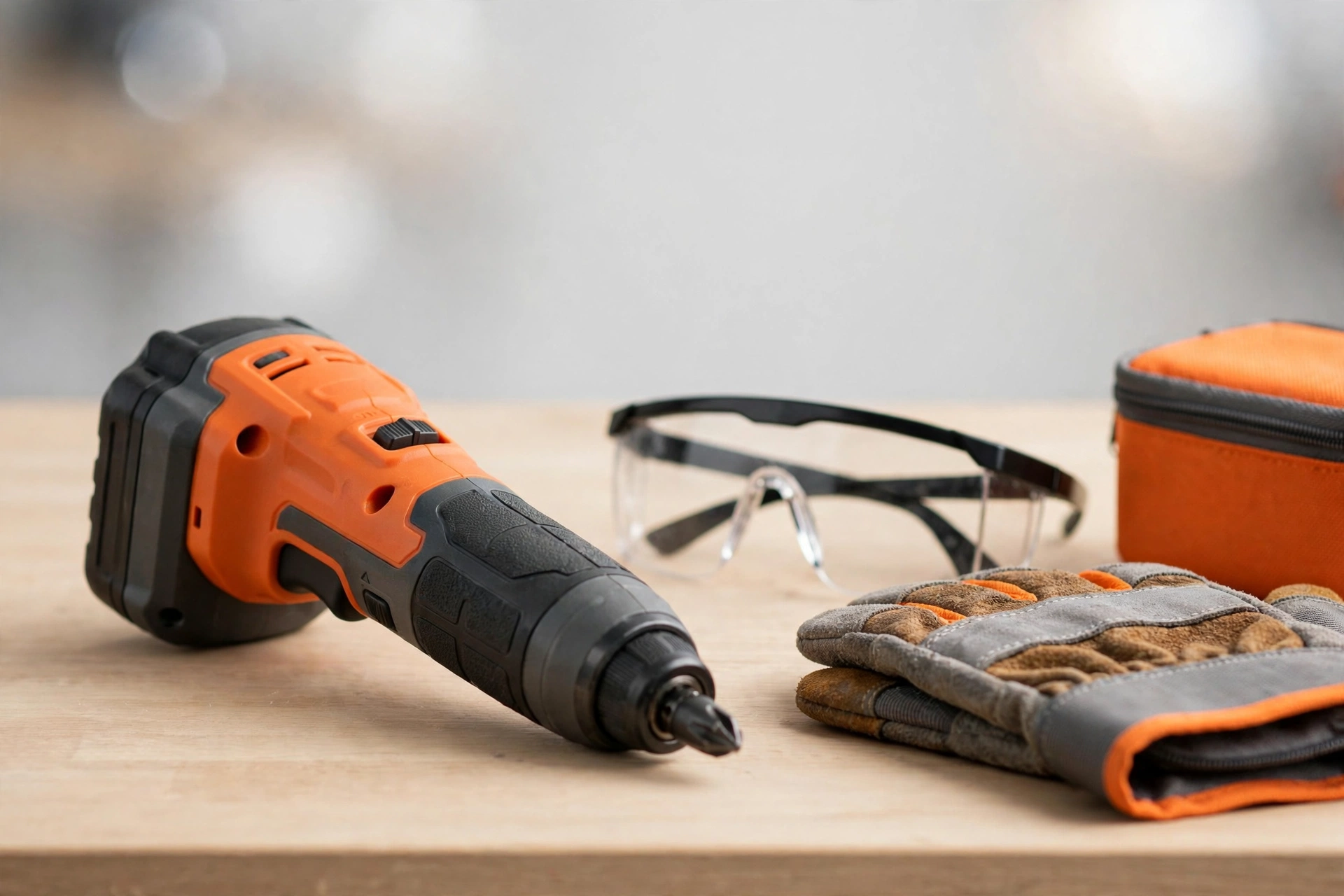
Eye protection is the single most useful safety habit for this tool. A screw can shed a tiny metal fragment, a bit can throw dust, and a screw head can break apart under pressure. Safety glasses are light, cheap, and easy to keep with the tool, so put them on before you start, even for a job that will only take a minute. Ordinary glasses help, but they are not a substitute for safety glasses that cover the sides of your eyes. Avoid loose gloves, which can catch on a spinning bit, and loose sleeves, jewellery, and long hair. For most small jobs, bare hands give you better control, provided you keep your fingers away from the bit.
Hold the tool correctly and keep fingers clear
Hold the screwdriver firmly with your whole hand and keep your wrist straight. A straight wrist gives you more control and puts less strain on your hand. Never hold the workpiece close to the screw while the tool is running, and never steady a screw with your fingers while the bit is turning. Clamp the workpiece, rest it on a stable surface, or hold it well away from the screw. If you need to start a screw by hand, turn the tool off first. Keep your fingers clear of the chuck and the bit while the tool is running, and wait until the bit has stopped completely before you touch it, change it, or set the tool down.
Press the screwdriver gently and squarely into the screw, keeping the bit in line with the screw shaft. If you push at an angle, the bit will slip out and may scratch the surface or your hand. Use light, steady pressure and let the motor turn the screw. If the screw stops turning, release the trigger and check whether the screw is at the bottom, whether the bit is worn, or whether the torque setting is too low. If your tool has a torque clutch, start on a low setting and increase it only as far as the job needs. Use a slow speed to start the screw.
Choose the right bit and check it before use
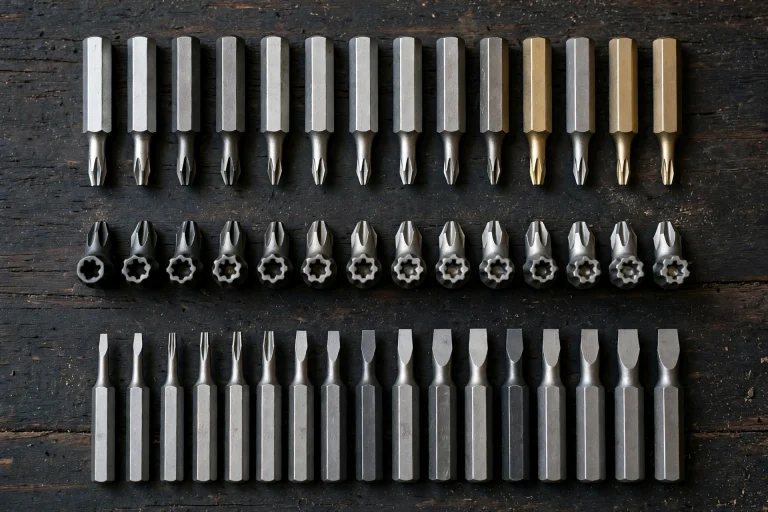
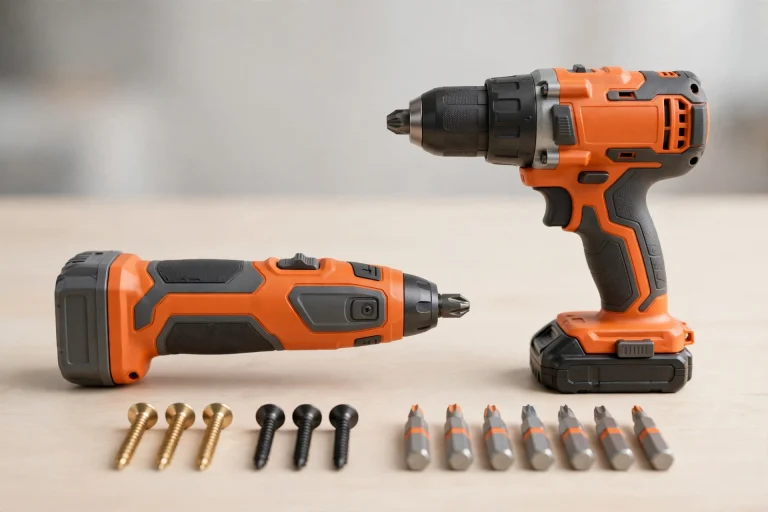
Choose a bit that matches the screw head exactly. A Phillips bit belongs in a Phillips screw, a Torx bit in a Torx screw, and a slotted bit in a slotted screw. The size matters too: a bit that is slightly too small will spin inside the screw head, while one that is too large will not seat fully. The guide on electric screwdriver bits explains the common types and how to tell them apart. Set aside any bit that is worn, chipped, bent, or rusted, because a worn tip slips more often. Make sure the bit is fully inserted and locked in the holder before you start, and change bits only when the tool is switched off and the bit has stopped turning. If you need a small, light tool for delicate work, a mini electric screwdriver can be easier to control than a full-size driver.
Battery safety: charging, storage, and damaged batteries
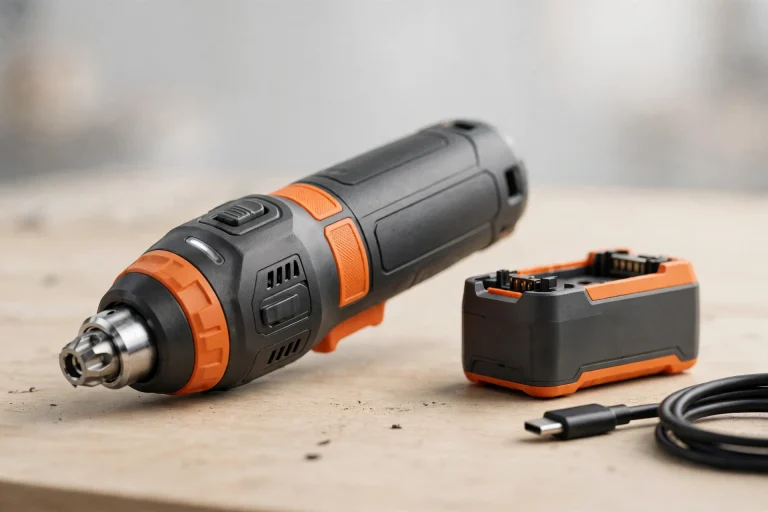
Charge the battery with the charger that came with the tool, or with a charger the maker says is compatible. A charger that looks similar is not necessarily correct, and using the wrong charger can overheat the battery. See how to charge an electric screwdriver for the full guidance. Charge on a hard, flat, non-flammable surface in a well-ventilated room, away from bedding, curtains, and paper. Do not leave a battery charging for much longer than the maker recommends. If the battery, charger, or tool becomes very hot, smells strange, swells, or makes a hissing sound during charging, unplug the charger from the wall first if it is safe to do so, then move away and let the battery cool in a safe place.
Store batteries in a cool, dry place, away from direct heat and metal objects such as keys, coins, and screws, which can short the terminals if they touch them. Stop using a battery immediately if it is swollen, cracked, leaking, dented after a drop, or very hot to the touch. Do not try to charge it, puncture it, or take it apart. Keep it away from flammable materials, do not put it in household waste, and take it to a battery recycling point or follow your local disposal rules. If a battery leaks, avoid touching the liquid and wash your hands.
Working overhead and near live wires
Working above your head is harder than working at waist height. Dust and small parts fall towards your face, your arms tire faster, and a slipped bit is closer to your eyes. Wear safety glasses without exception when you work overhead, keep the screwdriver steady with both hands if you can, and use a stable platform rather than stretching. If you feel dizzy or unsteady on a ladder, climb down, rest, and ask for help.
Before you screw into a wall, a ceiling, or a floor, think about what may be behind the surface. This is the most serious risk in home screwdriving, because the danger is hidden. If you are working near a socket, a light switch, or a fuse box, switch the power off at the main switch or the relevant circuit breaker before you start, and tell everyone in the house that the power is off. Never screw or drill blindly into a wall. Use a cable and pipe detector if you have one. If you are not sure, do not guess. Ask a qualified electrician or plumber, or choose a different fixing point.
Children, pets, damaged tools, and storage
An electric screwdriver is not a toy, and it should be treated as a tool that only adults use. Keep children and pets out of the workspace while you are working, and store the tool, the charger, and all bits and screws out of the reach of children when you are not using them. Do not leave a screwdriver running or plugged in and unattended, even for a minute.
Stop using a tool as soon as you notice damage. A cracked casing, a loose bit holder, a trigger that sticks, or a motor that smells of burning are all signs that the tool needs attention. Do not keep using it, and do not try to fix it by opening the casing yourself. Inside there are parts that can give an electric shock, even when the tool is unplugged, and opening the case usually voids any warranty. Contact the maker or seller if it is still under warranty, or take it to a qualified repairer.
Unplug the charger and, if your model allows it, remove the battery before you store the tool. Store the screwdriver, the battery, and the bits in their case, with the bits in their holders so the sharp tips are covered. Keep the case in a cool, dry place, out of the reach of children, and away from direct heat.
Safe habits and risky habits compared
| Situation | Safe habit | Risky shortcut |
|---|---|---|
| Starting a job | Inspect the tool, battery, and bit; clear the workspace | Grab the tool and start without a check |
| Holding the work | Clamp or rest the workpiece; keep fingers clear | Hold the workpiece close to the screw |
| Choosing a bit | Match the bit exactly; discard worn bits | Use the nearest bit, even if it slips |
| Battery charging | Charge on a hard surface with the correct charger | Charge on bedding or with a similar-looking charger |
| Working near wiring | Switch power off; check for hidden cables and pipes | Screw blindly into a wall |
Frequently asked questions
How often should I check my electric screwdriver for damage?
Check it briefly before every use and more thoroughly every few months. Before each job, look for cracks, a loose bit holder, a sticky trigger, and a battery that clicks firmly into place. If the tool has been dropped, check it immediately.
Do I really need safety glasses for a small screwdriver?
Yes. A small screwdriver can still throw dust, metal fragments, or a broken screw head towards your eyes, and it only takes a tiny piece to cause a painful injury. Safety glasses are light and inexpensive, and they take seconds to put on. Make them part of the routine, like picking up the tool itself.
What should I do if my electric screwdriver battery gets hot?
Stop using it and let it cool in a safe place away from flammable materials. Do not charge a hot battery, do not use it again until it has cooled fully, and do not put it in a drawer or a bag while it is hot. If the battery swells, leaks, or smells strange, stop using it and take it to a battery recycling point.
Can I use an electric screwdriver near water or with wet hands?
No. Do not use an electric screwdriver with wet hands, on a wet surface, or in the rain. Water increases the risk of electric shock and makes the tool harder to grip, which makes slips more likely. Dry your hands, dry the surface, and wait until conditions are dry before you start.
Is it safe to let a child use an electric screwdriver?
An electric screwdriver is an adult tool, not a toy, and children should not use one unsupervised. Keep the tool, charger, bits, and screws out of the reach of children, and keep children and pets out of the workspace.
What should I do if I screw into a hidden cable or pipe?
Stop immediately and do not touch the screw, the tool, or the wall around it. Switch the power off at the main switch if it is safe to do so. Do not try to pull the screw out while the power is still on. Call a qualified electrician or plumber.
Conclusion
Electric screwdriver safety is mostly common sense. Protect your eyes, check the tool and the bit before you start, keep your fingers clear, use the right torque, and treat the battery with care. Think before you screw into a wall, switch the power off when you are near wiring, and stop using a tool as soon as it shows signs of damage. Keep this checklist with your tool until it becomes a habit.